Sunday, April 19, 2009

I'm in Bariloche

Hello everyone who reads my blog,

I'm in San Carlos de Bariloche, Argentina (you should google it).
I have been so busy the past few weeks and haven't had time to blog. I have all kinds of fun things to write about but will do so later. I spent last week frantically finishing up my research in the lab and writing my paper... I think it turned out okay.

We took a 22 hour bus ride from Córdoba to Bariloche and got here yesterday. After Bariloche we are heading further south to El Calafate to see some cool glaciers. We decided to travel around Patagonia instead of Machu Picchu; it would have taken three days (by bus) to get to Peru and we just didn't have time to do it. I guess I'll have to come back to South America, oh darn.
I went horseback riding today... not sure how the cowboys were able to do it all day because my tookas is SORE after only three hours (maybe because I don't know what I'm doing?).

more adventures to come later.

Monday, April 6, 2009

Quebrada de Humahuaca

I'm too lazy to re-order my photos. When you upload them onto blogger it puts the new ones at the top; basically the photos from the beginning of the day are going to be at the end of this post.

We ended the day (day after Purmamarca) in San Salvador de Jujuy inside the justice building in the flag room learning about the flag of Argentina, and some other really old flag that General Belgrano (important in the Argentine war of Independence) made and gave to the province (I think? It was in Spanish and I wasn't listening that closely).
I do remember that the face of the sun is Incan-inspired; the straight lines of the sun rays represent European influence and the wavy lines are indigenous influence (if you are Argentine and reading this, correct me if I'm wrong).
View from the Plaza of San Salvador de Jujuy- looking at justice building.


Some nice scenery (on the way to Jujuy)- our tour guide Juan and Marie (Marie and her husband traveled with us the second day).


Along the highways they have tolls and different check-points; sometimes you get pulled-over and sometimes you don't. This time we did; I'm pretty sure Juan is passing 10 pesos to the guy under his license (to avoid some kind of ticket). I had to do the touristy thing and snap a photo.


This is Humahuaca. It was a very important stopping point when travelers went from Buenos Aires to the Spanish Viceroy in Peru. The tour guide explained that there were other routes they could have taken but this was the easiest because it wasn't as high in altitude as the other route (the animals carting everyone around could find stuff to eat). There was a third route they could have taken (can't remember where) but it was more jungle and was dangerous because of pumas and venomous bugs and mosquito's and so on.


This is a monument to Argentina's independence.


View of the city:


Pucará de Tilcara (fortress of Tilcara)

We stopped along the Quebrada de Humahuaca (gorge of Humahuaca) at the Pucará de Tilcara (I think Pucará is a Quechua word signifying fortress).


These buildings/ruins were re-built in the 1950's (I think with the materials from the original ruins that date back to the 15th century). Before the Spanish brought adobe bricks to South America, they used stone- like with these buildings. The roofs were made out of mud and madera de cardón (wood from them big cactuses you see in the background).


Along with homes, there were corrals (for llamas) and agricultural fields and so forth.


I wish I had written this a week ago when I remembered more.

Wednesday, April 1, 2009

EL ROBO

As I was walking back from the travel agency in Alta Córdoba (our barrio) and texting the agent a message to confirm that Amanda would leave the money (for the trip to Salta and Jujuy) with her sister (who is our Spanish teacher) some SOB, B@$#@&d came up behind me and stole my phone.  Can you tell I'm still bitter, not quite over it yet? 

He drove up behind me on the sidewalk, plucked it out of my hand and drove off. I know I should have been paying attention and not texting while walking but still, I'm pissed. It seems the exact same thing has happened to everyone I talk to.  People snatch their phones while they are talking or messaging. The phone was old (I bought it in Malaysia 5 years ago) but it was MINE and I knew how it worked. 

Don't laugh-  I filed a police report. (and took a photo of it so I could post it on the blog... yes I'm lame)
  
I was more interested in seeing how the process worked than in getting actual justice- I didn't actually think anything would come of it.  There was a police station literally TWO blocks from where the guy stole my phone.  I told the cops what happened in my broken, gringo *gringa cause I'm a girl* Spanish and they let me drive around with them in the back of their truck (in case the guy was still in the area).

More than anything they were probably trying to calm the freaked out foreigner- they knew and I knew, that the guy and phone were long gone.  I'll be more careful from now on.

In the words of my Grandpa Martin,

"Shit happens"

Tuesday, March 31, 2009

Salta y Jujuy Day 2

We got up bright and early for a long day. We stopped to see some viaduct bridge that some engineer built (he was born in America and moved to Argentina, I don't remember his name...now if he were a biologist I might be able to recall it). The guide told us that a lot of people died during the construction of the railway (extensive railway that includes this bridge) and are buried along the way.


It was COLD... especially because it was morning. Argentina is going into its fall season and the altitude was really high- I should have thought to take a jacket or something but everything about the whole trip was last minute. In fact, I went to the travel agent and arranged everything the day we left.

Now to the fun parts of the trip:

The scenery was gorgeous:

We stopped to see pre-Incan ruins near Santa Rosa de Tastil. The people of Tastil lived here in the 1400s and up and disappeared one day- no one really knows why (similar to the story of the Anasazi in the U.S.).

Can I just say I LOVE this kind of stuff? I could have spent hours here walking around and exploring.  If biology wasn't so cool I'd be an archaeologist (do I sound like a dork or what?).
You can see the ruins of the buildings and houses that were once here; I think it housed over 2000 people.
There were all kinds of pottery sherds laying around! It was also fun to look for flakes.  Maybe my archaeologist friend Brian could leave a comment and explain why it's pottery "sherds" and not "shards"??  - If he's reading this.
So fun in fact, I couldn't take the time to look up and smile.

We stopped in the town of San Antonio de los Cobres for lunch.  There were women outside selling things... I bought a nice shawl or ruana hand made out of llama wool.

As we drove to the next site we saw the llamas.
The little ribbons and bows tied on signify which llama belongs to which owner.
We tried some llama while up north... It was actually pretty good.

We next headed for Las Salinas- the salt flats.  
The little pueblitos along the way were more interesting to see than the salt flats themselves- we have salt flats in Utah.

Here is a chapel and some other buildings of a tiny little pueblo we stopped at just before the salt flats.
There were some cute kids...
This little boy was smiling the whole time... really sweet.
My favorite part of the whole weekend was seeing little pueblos like this one.  It was nice to get out of the big cities and see what rural parts of Argentina are like.

So we got to the salt flats...
 
and there were groups of men selling rock etchings of different scenes of the region- I bought a cool etching of vicuñas
Vicuñas are part of the camelid family including camels, llamas, alpacas, and guanacos.
We saw some vicuñas on our way to the salt flats... they are very similar to guanacos but guanacos have black faces.

The guide was telling us that the parents and grandparents of these people worked around the salt flats (the salt is mined and the "dirty salt" is used commercially to cure leather) went blind from the intense glare and reflection of the sun.  He also said that in the future these men would probably go blind from being out there all day everyday... it was sobering to think about.

Amanda was really starting to piss me off...
So I decided to smoosh her and bite her in half.

On the way to Purmamarca- the town where we spent the night, we went through the mountains. The highest elevation was 4170 meters, or 13,681 feet.  The elevation in Salt lake city is about 4,330 feet- about three times less than where we were at.  The air was thin- we were passing out and falling asleep in the car.  When we'd walk up a few stairs or a tiny hill we'd be huffing and puffing.
The scenery was absolutely gorgeous!
We stayed the night in Purmamarca.  
There were all kinds of fun things to buy in the city's plaza.  There is a phrase from one of the greatest Metallica songs ever written:

"Anywhere I roam,
where I lay my head is home"

Well, 

Anywhere I roam,
I shop.


It was chilly- I needed an alpaca sweater and a sheep's wool, hand-woven blanket.
Purmamarca is famous for its beautiful landscapes and for the famous Cerro de los Siete Colores, or hill of seven colors.
It was a busy day but we stayed up late and went to a bar/restaurant to listen to some folk music.  The music of northern Argentina is very similar to that of Bolivia- they use a lot of the same instruments and rhythms.

We woke up slightly less early the next day and prepared for another day of adventurous sight-seeing...

Monday, March 30, 2009

Salta

Fuimos al Norte por el fin de semana pasado.

We went North over the weekend- to the provinces Salta and Jujuy (pronounced who-whooey). It was absolutely gorgeous!

It seems EVERY city big or small has a plaza in the center; this is the Plaza 9 de Julio (July 9th marks the date of Argentina's Independence from Spain). Most plazas have a cathedral, cabildo (like a city building), justice building, statue(s)/water fountains, and then restaurants and other businesses.


In the Plaza there was a tent with veterans from La Guerra de Las Malvinas (war Argentina fought with Britain for the Falkland Islands). I found out today from my Spanish teacher that this Thursday, April 2 is a dia feriado (holiday) commemorating La Guerra de Las Malvinas.

There were posters and pictures as well as the veterans with old newspapers explaining things from their point of view.


This is the cathedral...

I don't remember what building this was (below) but the architecture was really beautiful.

Lots of students were on break and hanging out in the Plaza.


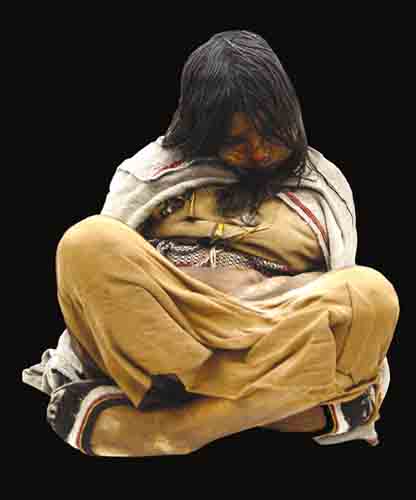
"Niños del Llullaillaco"

There was a really incredible museum (El Museo de Arqueología de Alta Montaña) in the Plaza that told of the archaeological discovery of three Incan mummy children found in the Andes- "Niños del Llullaillaco." Llullaillaco (name of a volcano) is a Quechua (native dialect) word "Llulla" signifies lie/false, and "llaco" is water- put together it's "false water" or something like that.

If you google the Niños del Llullaillaco, it says that three Incan children were sacrificed almost 500 years ago; according to the museum and information presented there, Incans didn't believe they were "sacrificing" the children or feeding them to the gods. The Incas performed religious ceremonies before putting the children (while alive) into the ground; when the children went into the cavernous structures, the Incas believed they went to paradise with the gods and didn't die (according to the way we think of death) - it was considered a great honor.

These "sacrifices" didn't occur often and the Incans chose children because they were considered to be the most pure. The museum mentioned that the children were from noble families because their skulls were slightly cone-shaped (from wearing a device that bent the skull that way).

Here is a picture of a 15-year old girl nicknamed La Doncella (the maiden). She was the only mummy on exhibit (the museum rotates them so they aren't all on exhibit at the same time).

The archaeological site where these mummy children were found is the highest altitude site in the world; the children are the best preserved Incan mummies as well. They were frozen- DNA analysis and analysis on their blood and organs has been done.

Though a lot of the information was in Spanish, there were some English translations. It was all very, very fascinating. Visiting the museum was probably my favorite thing we did in the city.


We then went to the city museum; it was a collection of a bunch of random stuff... Amanda wasn't very interested.


This is a picture of one of the cathedrals in Salta. It was built in the 1700s (I think) and was described as the most "outlandish" cathedral in Salta.


We ate at a place across from the cathedral; we tried humita en chala. Humita en chala (en chala meaning wrapped up like this in corn husk) is quite different from a tamale but very good. The masa is wetter- the waiter said it is made with fresh corn, not dried corn masa as used in tamales. It had fresh corn and cheese in the middle; humita is regional food but can also be found in Córdoba (it was really good).

We went back to the hostel relatively early (11:00 ish) because we had to get up way early the next day (6:00 AM). Y'all may not think 6:00 AM is that early but it is when regional custom is to go to dinner around 10:30 PM or later.